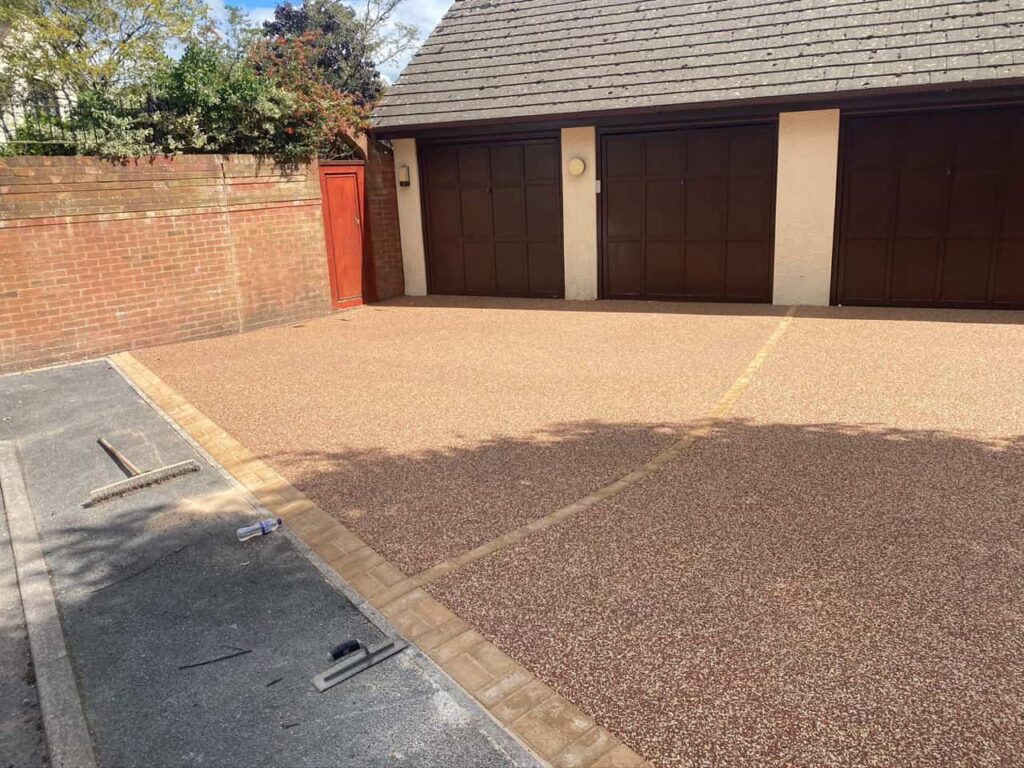
Why Does a Block Paving Path Need Strong Edge Restraints?
A well-laid block paving path should feel firm, look neatly defined and remain stable as it is used throughout the year. While the paving blocks themselves create the visible finish, their long-term performance depends heavily on components that receive far less attention. One of the most important is the edge restraint.
Edge restraints provide a secure boundary around block paving, helping prevent individual blocks from gradually moving outwards. Without sufficient support at the perimeter, even paving laid over a well-prepared base can begin to spread, creating wider joints, loose blocks and an increasingly uneven appearance.
For homeowners in Chatteris, Cambridgeshire, understanding the importance of edge restraints helps explain why professional preparation and installation matter just as much as choosing attractive paving blocks.
What Is an Edge Restraint in Block Paving?
An edge restraint is the secure boundary installed around the perimeter of a block paved area.
Block paving consists of individual units laid closely together. Once installed correctly and jointed, these blocks form a stable interconnected surface. However, the system needs something solid around its outer edges to contain it.
Depending on the design of the path, edge restraints can also become an attractive visual feature, creating a defined border between the paving and adjoining lawns, planting or other garden surfaces.
Their structural role, however, is the most important consideration.
Block Paving Depends on the Complete Installation
It is easy to judge a new path mainly by the colour, pattern and style of its paving blocks. In reality, much of what determines its performance is either underneath the surface or around its perimeter.
A properly constructed block paving path requires attention to:
- Ground preparation
- A stable sub-base
- Appropriate levels
- A suitable laying course
- Correctly positioned blocks
- Secure edge restraints
- Proper jointing
- Effective surface drainage
If one of these elements is poorly constructed, it can eventually affect other parts of the path.
Edge Restraints Help Prevent Sideways Movement
Although people mainly apply downward pressure when walking along a path, the forces within block paving are not exclusively vertical.
As the paving is used, small forces can be transferred through the individual blocks towards the perimeter.
Strong edge restraints contain the paved area and help prevent the outside blocks from moving laterally.
Without this support, perimeter blocks may gradually shift. Once movement begins at the edge, it can start affecting blocks further into the path.
What Happens When the Edges Are Weak?
Weak or failing edges do not always create an obvious problem immediately.
Deterioration may begin gradually, with one or two perimeter blocks moving slightly out of position. Over time, the changes can become more noticeable.
Possible signs include:
- Outside blocks moving away from the main paving
- Wider joints developing between blocks
- Individual blocks becoming loose
- Edges losing their straight or intended shape
- Localised sinking or unevenness
- Jointing material disappearing more frequently
These symptoms can make a previously tidy path look increasingly neglected.
More importantly, they can indicate that the paving is losing some of the restraint needed to keep the individual blocks securely positioned.
One Moving Block Can Affect Its Neighbours
Block paving works because the individual units support one another as part of a complete surface.
If an outside block moves because the edge is inadequately restrained, additional space can develop beside it. The neighbouring block may then have more opportunity to move as well.
This can create a gradual progression from the perimeter towards the centre of the paving.
A relatively small weakness around the edge can therefore become responsible for a much larger area requiring attention if it is allowed to continue deteriorating.
Strong Edges Help Maintain Tight Joints
Consistent joints are an important part of good block paving.
When blocks remain properly contained, their spacing can stay relatively uniform. If the perimeter begins spreading, joints may become wider or irregular.
This can affect both appearance and stability.
Keeping the paving securely restrained helps the blocks remain in their intended positions and supports the effectiveness of the jointing material between them.
Edge Restraints Help Preserve the Shape of the Path
Not every block paving path is completely straight.
Curves, corners and changes in width can all be incorporated into the design, allowing the path to complement the shape of a garden or property entrance.
These features rely on accurately constructed boundaries.
Strong edge restraints help maintain:
- Straight lines
- Curved sections
- Corners
- Changes in direction
- Decorative borders
Without sufficient support, carefully designed shapes can gradually become less defined as individual paving units move.
Narrow Paths Particularly Depend on Secure Edges
Edge restraints are important for all block paving, but their role is particularly easy to appreciate on narrower paths.
A relatively large proportion of the paving sits close to an outer edge. If one side begins to move, the stability and appearance of the entire width can quickly be affected.
This is why a garden path should not be viewed as a smaller project where structural preparation matters less than it would on a driveway.
Good construction remains essential.
Adjoining Ground Does Not Always Provide Enough Support
Homeowners may assume that soil, lawn or planting beds beside a path will naturally hold the paving in position.
These surrounding materials are not necessarily suitable substitutes for a properly constructed edge restraint.
Ground conditions can change with moisture and regular garden activity. Soil can also be disturbed during planting and maintenance.
A purpose-built restraint provides a defined structural boundary rather than relying on adjoining landscaping to contain the paving.
Good Edge Construction Protects the Sub-Base
Edge stability is not only about preventing the visible blocks from moving.
The perimeter also helps maintain the integrity of the construction beneath the surface.
If the edge of a path deteriorates significantly, supporting materials can become disturbed or migrate away from where they are required. This can contribute to localised instability around the perimeter.
Proper containment helps keep the different layers of the paving construction working together.
Edges Are Particularly Important Around Curves
Curved block paving paths can create an attractive transition through a garden, but the edge detailing needs to be carefully constructed.
The perimeter defines the curve and helps hold cut or specially positioned paving units securely in place.
Poorly supported curved sections may gradually lose their intended line, particularly where small cut blocks have been used.
Professional installation ensures the structural requirements of the edge are considered alongside its visual appearance.
A Strong Border Can Improve the Finished Appearance
Edge restraints can also contribute significantly to the overall design.
A well-defined border gives a path a deliberate, professionally finished appearance and creates a clear transition into surrounding areas.
Depending on the chosen paving design, borders can be used to:
- Frame the main paving
- Highlight curves
- Define entrances
- Create contrast
- Complement other paved areas
- Provide a neat transition into lawns or planting
The best results combine this decorative function with the structural support the paving requires.
Edge Problems Can Sometimes Be Repaired
If a block paving path has already started moving around its perimeter, complete replacement is not automatically necessary.
Where deterioration remains localised, it may be possible to lift affected blocks, restore appropriate support and reinstate the paving.
The surrounding area should be assessed first to determine how far the movement has progressed.
Simply pushing loose blocks back into position without correcting the failed edge is unlikely to resolve the underlying problem.
Why Early Attention Is Worthwhile
A loose edge is easier to address before movement spreads across a larger section of paving.
If you notice blocks beginning to separate, lean or move around the perimeter, having the area inspected can help establish whether the issue remains localised.
Early attention can help protect paving that is otherwise performing well.
This is particularly worthwhile where the path receives frequent use, as continuing movement can gradually make uneven sections more noticeable.
Edge Restraints Cannot Compensate for a Poor Base
Although strong edges are essential, they are only one part of a properly constructed path.
Secure restraints cannot prevent problems caused by inadequate preparation underneath the paving.
If the sub-base is unstable, the blocks may still sink or become uneven despite having well-built borders.
Likewise, an excellent base cannot completely compensate for weak edges.
The strongest block paving installations result from all elements being constructed correctly and designed to work together.
Why Professional Installation Makes a Difference
Installing block paving involves considerably more than arranging paving blocks into an attractive pattern.
A professional installation considers the complete structure of the path, including what cannot be seen once the project is finished.
At Chatteris Driveways, attention is given to preparation, levels, supporting layers, edge restraint and the finished paving surface. This complete approach helps create paths that are not only visually appealing when first installed but also designed for dependable everyday use.
Choosing Block Paving for Paths in Chatteris
Block paving can be an excellent choice for garden paths and pedestrian access around a property.
It offers considerable flexibility in terms of patterns, colours, borders and layout while creating a clearly defined and practical walking surface.
For the best result, however, the path needs to be treated as a complete construction project rather than simply a decorative layer of paving.
Strong edge restraints are an essential part of achieving that result.
Professional Block Paving in Chatteris
Chatteris Driveways provides professional driveway and paving services throughout Chatteris, Cambridgeshire.
Whether creating a new block paving path or addressing problems with an existing paved area, we focus on the construction details that influence long-term performance. From preparing a suitable foundation to creating secure edges and a carefully finished surface, each stage contributes to the quality of the completed paving.
If an existing path has begun spreading or becoming loose around its edges, professional assessment can also identify whether localised repairs are appropriate.
Conclusion
Strong edge restraints are essential for a block paving path because individual paving units need a secure perimeter to remain properly contained. Without adequate support, outside blocks can begin moving, joints can widen and instability can gradually spread further into the paved area.
Good edge construction also helps maintain the shape of the path, protects supporting materials and creates a clean, well-defined finish. However, edge restraints are most effective when combined with correct ground preparation, a stable sub-base and careful installation throughout.
For homeowners in Chatteris, Cambridgeshire, Chatteris Driveways provides professional block paving services with attention given to both the visible finish and the construction supporting it. If you are considering a new block paving path or your existing paving is becoming loose around the edges, contact our team to discuss the most suitable approach.
Call us on: 01354 707 465
Click here to find out more about Chatteris Driveways
Click here to complete our contact form and see how we can help with your driveway needs.