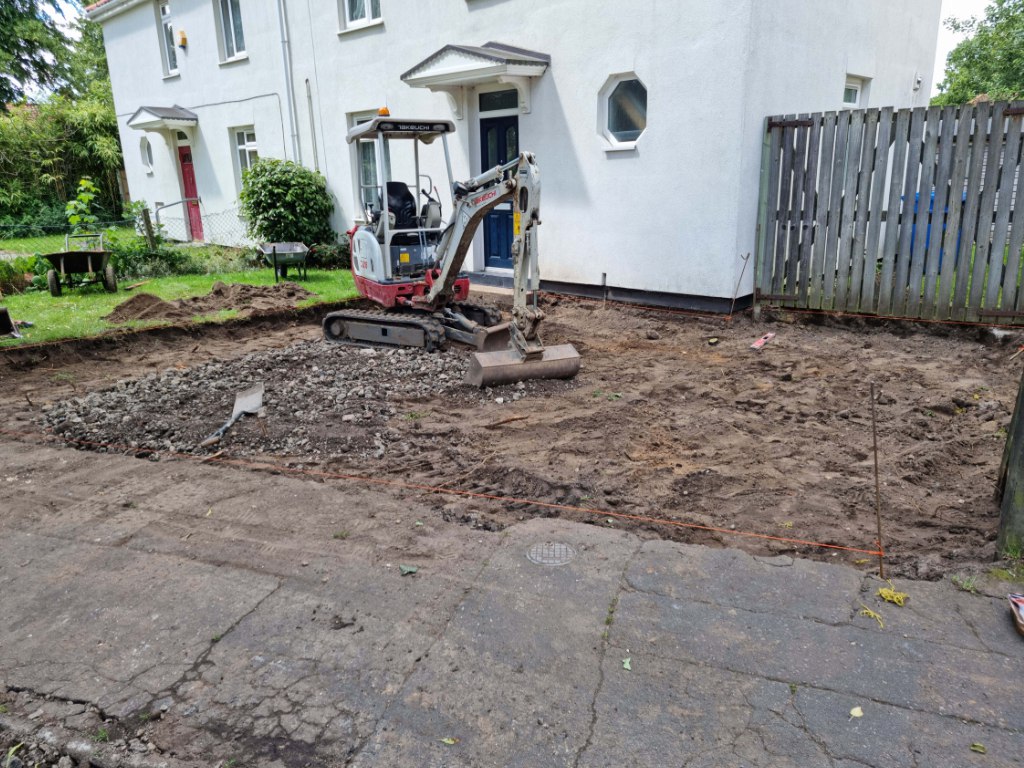
New Driveway or Resurfacing: How Do You Decide?
An ageing driveway does not always need to be removed and rebuilt. If its underlying construction remains stable, resurfacing may restore its appearance and provide a dependable new wearing course. Where deterioration begins below the surface, however, covering the existing driveway is unlikely to resolve the problem.
The correct choice depends on the condition of the sub-base, the type and extent of damage, drainage performance and how the driveway needs to function. For property owners in Chatteris, Cambridgeshire, a professional assessment can determine whether the existing construction offers a suitable foundation or whether a new driveway is the more appropriate solution.
Factors That Determine Whether to Resurface or Rebuild
The visible surface provides useful clues, but it does not reveal the whole condition of a driveway. A contractor should assess how the surface has failed, whether it remains level and how effectively the supporting layers manage everyday vehicle use.
When Resurfacing May Be Suitable
Resurfacing involves preparing an existing driveway and installing a new surface over it. It can be effective when the driveway remains structurally sound but has become worn, faded or lightly damaged.
Typical signs that resurfacing may be appropriate include:
- Shallow surface wear
- Minor cracking confined to the upper layer
- A generally level and stable driveway
- No significant movement beneath vehicle wheels
- Drainage that continues to work effectively
- Firm, intact edges
- Damage that has not repeatedly returned after previous repairs
Any defects must still be prepared correctly before the new surface is applied. Installing material over untreated cracks or loose sections can allow those faults to reappear.
When a New Driveway Is Usually More Appropriate
A complete replacement is more likely to be needed when deterioration extends into the foundation. Removing the old driveway allows the ground to be prepared again and a suitable sub-base to be installed.
Warning signs that rebuilding may be the better option include:
- Deep or interconnected cracking
- Widespread sinking or unevenness
- Soft areas that move under vehicle weight
- Potholes that repeatedly return
- Loose or crumbling material across large sections
- Persistent standing water
- Failed edges or inadequate support
- Damage affecting several different parts of the driveway
These problems suggest that the visible surface is not the only issue. A new top layer cannot remain stable if the material beneath it continues to move.
The Importance of the Sub-Base
The sub-base distributes vehicle loads and helps prevent the finished surface from sinking or breaking apart. It must be laid to an appropriate depth, compacted thoroughly and supported by stable ground.
If the sub-base is sound, it may provide a reliable foundation for resurfacing. If it is too shallow, poorly compacted or contaminated with soft material, the new surface may inherit the same problems as the old one.
Testing the stability of different areas is therefore an important part of the assessment.
What Cracks Can Reveal
Not all cracks mean the same thing. Fine surface cracks may result from ageing and could be treatable during preparation. Wider cracks, branching patterns or cracks accompanied by movement often indicate problems below the surface.
The position of the cracks also matters. Damage following wheel tracks may relate to repeated loading, while cracks around sunken sections can suggest settlement. Understanding why the cracking occurred helps prevent the same pattern from returning.
Consider Levels and Drainage
A driveway should direct rainwater away from vulnerable areas without leaving persistent puddles. Resurfacing adds another layer, so existing levels and gradients must be suitable before work begins.
If the driveway already drains effectively, its current layout may be retained. Where water regularly collects, flows in the wrong direction or reaches adjoining surfaces, rebuilding may provide a better opportunity to correct the falls and drainage route.
Check the Condition of the Edges
Strong edges support the driveway and help prevent the surface from spreading or breaking away. Resurfacing may be possible if the existing restraints remain secure and correctly positioned.
Where edges have collapsed, moved or become undermined, more extensive work may be required. Rebuilding allows new restraints to be incorporated as part of the complete driveway construction.
Think About How the Driveway Is Used
The most appropriate solution also depends on the demands placed on the surface. A driveway used by several vehicles requires dependable support across parking areas, turning points and entrances.
Changes in household needs can affect the decision. If the driveway needs to be widened, reshaped or made easier to access, installing a new driveway may allow the layout to be improved rather than preserving an arrangement that is no longer practical.
Previous Repairs Provide Useful Evidence
A small number of successful repairs does not necessarily mean the driveway needs replacing. However, patches that crack, sink or loosen repeatedly may indicate movement in the supporting layers.
A surface containing numerous repairs can also deteriorate unevenly because its sections respond differently to traffic and weather. Reviewing where previous work has failed can help identify whether the problem is localised or affects the driveway more widely.
Why Surface Preparation Matters
Resurfacing is only successful when the existing driveway is prepared thoroughly. Loose material must be removed, defects repaired and the surface cleaned so the new layer can bond correctly.
The contractor must also ensure that the added surface will not create unsuitable levels around entrances, drainage features or edges. Good preparation turns an appropriate existing driveway into a dependable base rather than simply concealing its wear.
The Value of a Professional Assessment
It can be difficult to judge the condition of a driveway from appearance alone. A surface may look tired but remain structurally sound, while a relatively small crack may reveal deeper movement.
A professional contractor can examine the sub-base, surface, edges, levels and drainage as one system. This provides a clear basis for choosing between resurfacing and full replacement without recommending unnecessary work.
Conclusion
Resurfacing may be suitable when an existing driveway is stable, well drained and affected mainly by surface wear. A new driveway is generally more appropriate when there is widespread movement, recurring damage, poor drainage or failure within the sub-base.
Chatteris Driveways provides professional driveway assessments and installations in Chatteris, Cambridgeshire. If your existing surface is showing signs of deterioration, contact our team to determine whether resurfacing or a new driveway would offer the most dependable result.
Call us on: 01354 707 465
Click here to find out more about Chatteris Driveways
Click here to complete our contact form and see how we can help with your driveway needs.